Blockchain Web 3.0 Development Company
A powerful trigger for your business growth
We help startups leverage blockchain technologies to solve real-world problems related to privacy, decentralization of trust and scalability.

We help startups leverage blockchain technologies to solve real-world problems related to privacy, decentralization of trust and scalability.
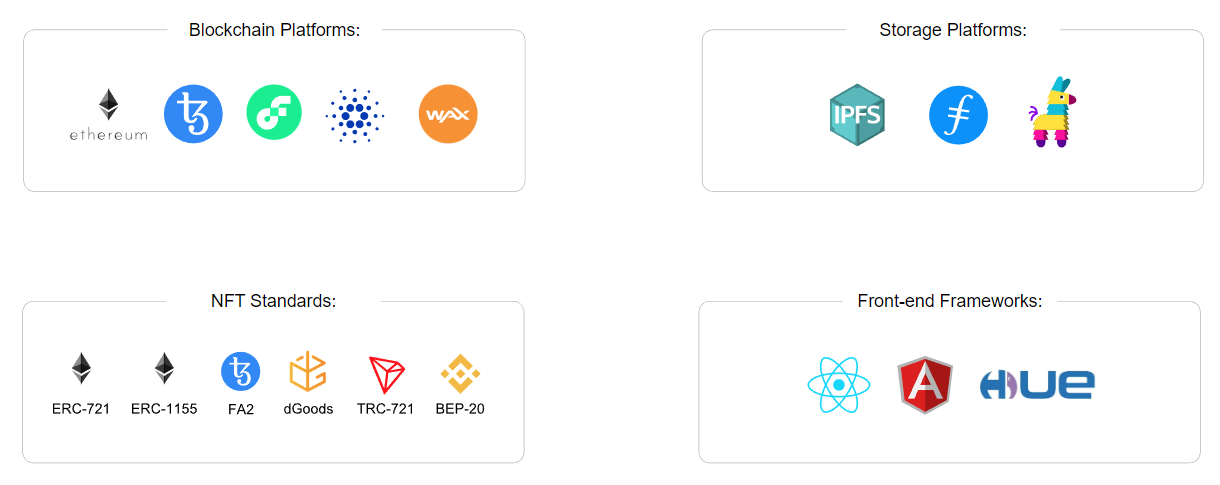
We harness the potential of varied Blockchain platforms to deliver innovative enterprise grade blockchain solutions that make a difference.











Headquartered in the Delaware area with offices in Miami and Madrid, our company was founded by team of seasoned professionals who came together with the common goal of solving software development’s biggest challenge: delivering quality solutions on time and on budget. Now, with multinational teams across the Americas, our agility, transparency, and dedication to fluid communication has made us an invaluable technology partner to small, medium and enterprise-level companies around the globe.
Is to become the technological partner of companies, accompany them in their digitization process, help them to be more competitive and achieve their objectives in an efficient and sustainable way.
Blockchain Consulting
Smart Contract Development
dApp Development
NFT Marketplace Development
Launchpad Development
Tokenization Development
Blockchain Labs has been developing custom blockchain solutions for a global client base long enough to know that you need blockchain experts who understand business, not just code.
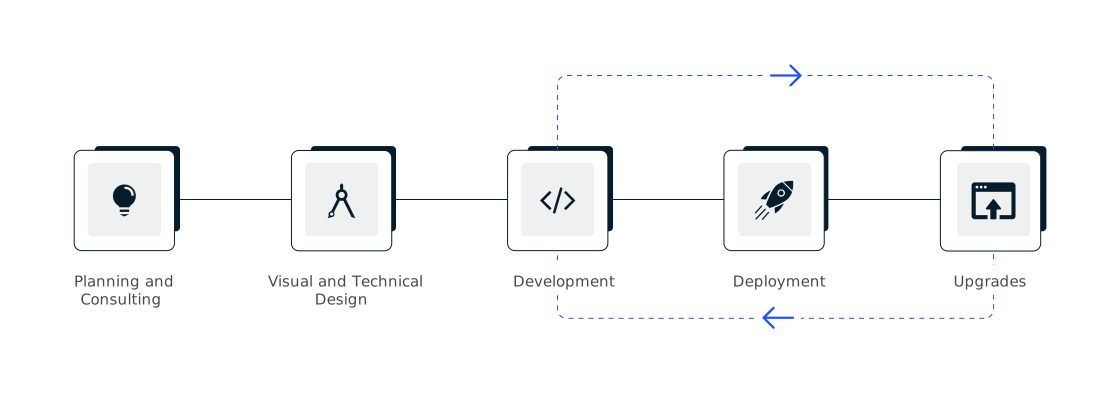
We start with what you need, then identify the right tools. You’re welcome at meetings, you’ll get regular reports, and your feedback is vitally important. We build solutions for your business.
With a team of expert developers bringing skills and experience in specific blockchain-relevant techniques, Aetsoft delivers best-in-class solutions across codebases, blockchains, and libraries.
Your business doesn’t stand still. Neither do we. We’re constantly improving our skills and understanding to deliver cutting-edge advice and services for you.
Trade NFT’s with ease using our NFT marketplace development services which helps you develop decentralized platforms over blockchain. We help you enable instant business traction and allow you to broaden the horizon of your business.
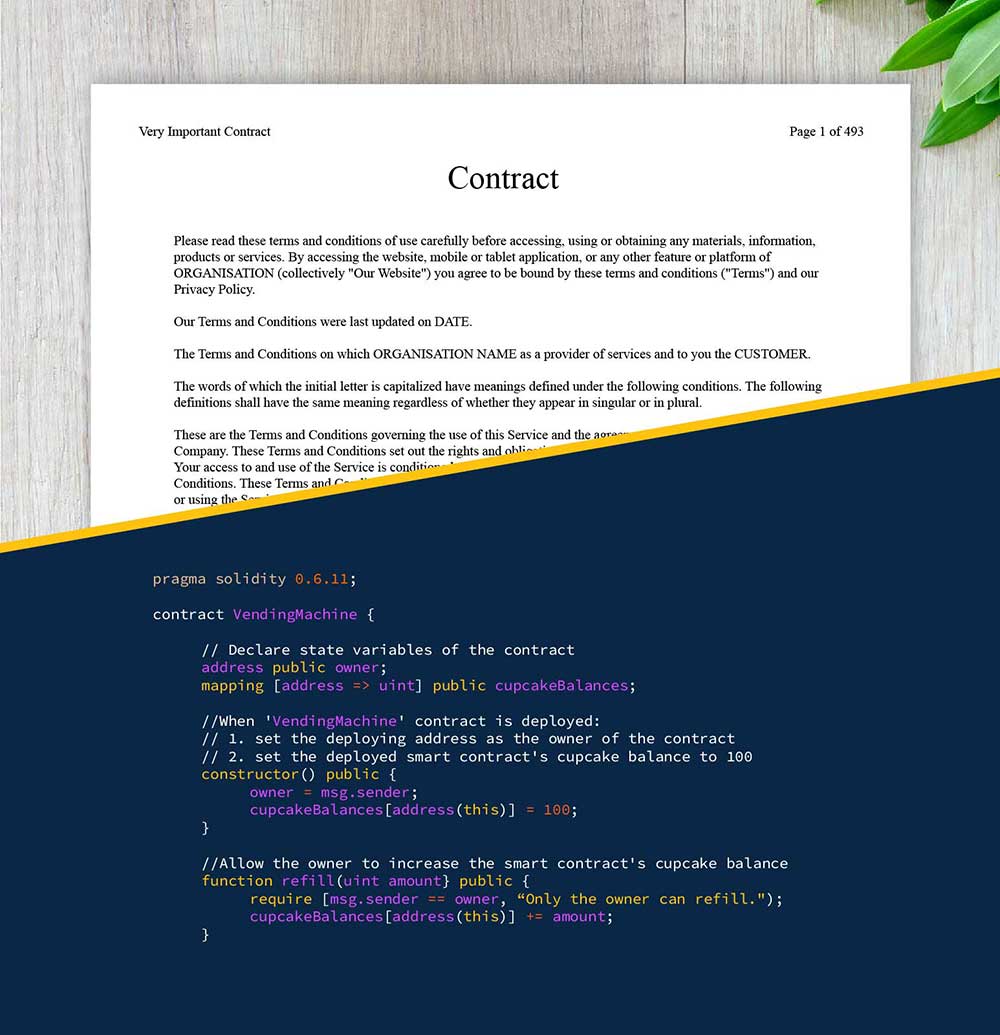
Smart contracts are automated digital contracts built into software using blockchain technology. They can automate processes, agreements, and transactions, removing the need for lengthy paperwork and human interaction. More efficient, more secure, and cheaper, smart contracts are essential for any business looking to leverage blockchain technologies. Blockchain Labs has been a smart contract development company for over 5 years, with 23 years of technology experience behind us. Our smart contract development services are delivered by Blockchain Labs’s specialised emerging tech and blockchain team who have built, advised on, scoped and integrated smart contracts into both new and existing projects and businesses.
Constructing a standardized, secure, and authentic ERC-20 smart contract is what we specialize in. In addition to developing basic contracts, we also focus on creating advanced ones with 100% compatibility.
Want to utilize stablecoins in your business without worrying about the transfer protocol issues or escrow accords? We are here to assist you in implementing secure contracts to streamline the issuance.
We develop smart contracts for non-fungible tokens that are entirely compliant with the ERC-721 token standard. The contracts are designed explicitly for ownership rights.
We develop automated smart contract protocols for creating the tokens, distributing them in exchanges, redemption, and other services under token utilization.
Offices
Projects
Happy Clients
Certified PMP
A blockchain is a distributed, cryptographically-secure database structure that allows network participants to establish a trusted and immutable record of transactional data without the need for intermediaries. A blockchain can execute a variety of functions beyond transaction settlement, such as smart contracts. Smart contracts are digital agreements that are embedded in code and that can have limitless formats and conditions. Blockchains have proven themselves as superior solutions for securely coordinating data, but they are capable of much more, including tokenization, incentive design, attack-resistance, and reducing counterparty risk. The very first blockchain was the Bitcoin blockchain, which itself was a culmination of over a century of advancements in cryptography and database technology.
Blockchain software is like any other software. The first of its kind was Bitcoin, which was released as open source software, making it available to anyone to use or change. There are a wide variety of efforts across the blockchain ecosystem to improve upon Bitcoin’s original software. Ethereum has its own open source blockchain software. Some blockchain software is proprietary and not available to the public.
Historically, databases have incorporated a centralized client-server architecture, in which a sole authority controls the central server. This design means that data security, alteration, and deletion rests with a single point of failure. The decentralized architecture of blockchain databases emerged as a solution for many of the weaknesses of centralized database architecture. A blockchain network consists of a large number of distributed nodes––voluntary participants who must reach consensus and maintain a single transactional record together.
A blockchain system refers to all the aspects and features that go into a particular blockchain, everything from the consensus algorithm to the state machine to cryptographic functions. As Andreas Antonopoulus and Gavin Wood note in Mastering Ethereum, there are “a huge variety of blockchains with different properties”––qualifiers “help us understand the characteristics of the blockchain in question, such as open, public, decentralized, neutral, and censorship-resistant.”
When a digital transaction occurs in a blockchain network, it is grouped together in a cryptographically-secure “block” with other transactions that have occurred in the same time frame. The block is then broadcast to the network. A blockchain network is comprised of nodes or participants who validate and relay transaction information. The block of transactions is verified by participants called miners, who use computing power to solve a cryptographic puzzle and validate the block of transactions. The first miner to solve and validate the block is rewarded. Each verified block is connected to the previously verified block, creating a chain of blocks. One important cryptographic underpinning of blockchains is the hash function. Hashing assigns a fixed value to a string that is inputted into the system. Blockchain hashing power results in a deterministic, quickly-computable, and preimage-resistant system. Explore our knowledge base to learn more about how a blockchain works.